
AIR SPADING
Air spading and root investigation across Surrey and London.
ATS uses compressed air to carefully expose tree roots, investigate hidden problems and relieve compacted soil with reduced risk of damage from conventional excavation.
When air spading may help
- Poor growth or unexplained tree decline
- Compacted soil around established trees
- Suspected root damage or decay
- Construction or excavation near roots
BELOW THE SURFACE
A clearer view of what is happening around the roots.
Air spading selectively loosens and removes soil, allowing the root system and surrounding ground conditions to be examined before decisions are made about further work.
Targeted root exposure
Reduced mechanical disturbance
Direct inspection of root condition
Evidence-led recommendations

WHAT AIR SPADING DOES
Root investigation without conventional digging.
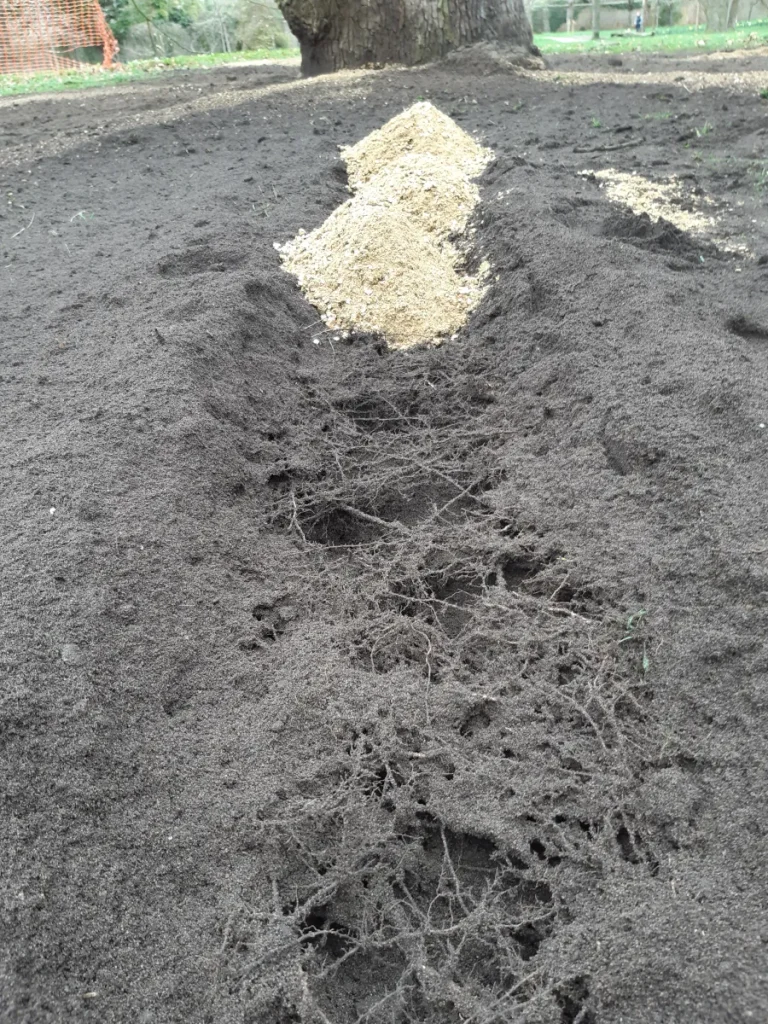
An air spade directs a controlled stream of compressed air into the ground, loosening and removing soil from around the root system without using conventional digging tools in the immediate investigation area.
Once exposed, roots can be examined for decay, physical damage, restricted growth or conflicts with planned work. The findings provide clearer evidence for proportionate recommendations and any further tree or soil management.
AIR SPADING APPLICATIONS
Targeted work around roots and compacted soil.
Air spading can support investigation, soil improvement and planning around established trees. The scope of work is selected according to the tree, ground conditions and reason for the investigation.
Root exposure and inspection
Selected roots are carefully exposed so their condition, structure and relationship with the surrounding soil can be examined.
Root collar investigation
Excess soil or accumulated material is removed from around the base of the tree to reveal the root collar and investigate hidden concerns.
Soil decompaction
Compacted soil is loosened to improve its structure and support the movement of air and water around the root system.
Construction near trees
Roots within proposed working areas can be located and examined to help inform planning, protection measures and appropriate methods.
Targeted soil improvement
Air-spaded channels or treatment areas can be created where suitable to support carefully planned soil-management work.
Drainage and ground conditions
The surrounding soil can be investigated where poor drainage, restricted growth or unsuitable ground conditions may be affecting the tree.
ASSESSMENT FIRST
Understanding the cause before changing the soil.
Tree decline, restricted growth and poor ground conditions can have several possible causes. Air spading is selected where exposing roots or investigating the surrounding soil is likely to provide useful evidence.
ATS assesses the tree, its environment and the reason for concern before defining the working area. The findings may lead to soil improvement, root management, monitoring or other proportionate arboricultural advice.
HOW AIR SPADING WORKS
A careful process from assessment to recommendations.
Air spading begins with a clear reason for investigating the tree or soil. The working area and method are then planned around the tree, site conditions and practical constraints.
01
Initial enquiry
Tell us about the tree, the concerns you have noticed and any planned work around the root area.
02
Site assessment
ATS examines the tree, surrounding ground, access requirements and the purpose of the investigation.
03
Controlled soil removal
Compressed air is used across the selected working area to loosen and remove soil from around the roots.
04
Root and soil inspection
Exposed roots and ground conditions are examined for damage, decay, compaction or other relevant concerns.
05
Findings and next steps
We explain what has been found and provide proportionate recommendations for monitoring or further work.
CLIENT FEEDBACK
Excellent service from quote survey through to work undertaken on large fir trees. On time arrival to great work keeping all the area tidy as they worked. Would highly recommend their services.
Gary
ATS customer · Trustpilot · April 2026
AIR SPADING FAQS
Questions about air spading and root investigation.
Questions about air spading and root investigation.
What is air spading?
Air spading uses compressed air to loosen and remove soil from around tree roots. This allows roots and surrounding ground conditions to be examined without conventional digging in the immediate investigation area.
Can air spading damage tree roots?
Air spading generally reduces the risk of damage associated with mechanical excavation. The working area and method must still be carefully planned around the tree, root condition and site constraints.
When might a tree need root investigation?
Root investigation may be appropriate where there is unexplained decline, suspected root damage or decay, compacted soil, poor drainage or proposed construction work close to a tree.
Can air spading relieve compacted soil?
Yes. Compressed air can loosen compacted soil and improve its structure around the root system. Any soil-improvement work should follow an assessment of the tree and surrounding ground conditions.
ROOT OR SOIL CONCERNS?
Arrange an air spading assessment.
Tell us about the tree, the symptoms you have noticed and any planned work nearby. ATS will assess whether air spading or another approach is appropriate.