
OAK PROCESSIONARY MOTH
Oak processionary moth management across Surrey and London.
ATS provides professional oak processionary moth treatment, assessment and nest removal across Surrey and London. The caterpillars and their nests contain irritating hairs that can affect people and animals, so suspected infestations should not be touched or disturbed.
Suspected OPM?
- Do not touch the caterpillars or nests
- Keep people and animals away
- Do not attempt to remove a nest yourself
- Arrange a professional assessment
OPM WARNING
Suspect OPM? Keep your distance.
Look for these signs from a safe distance. Do not touch the caterpillars or nests, and do not attempt to remove them yourself.
Grey caterpillars with long white hairs
Distinctive nose-to-tail processions
Silken nests on trunks or branches
Damaged or heavily eaten oak foliage
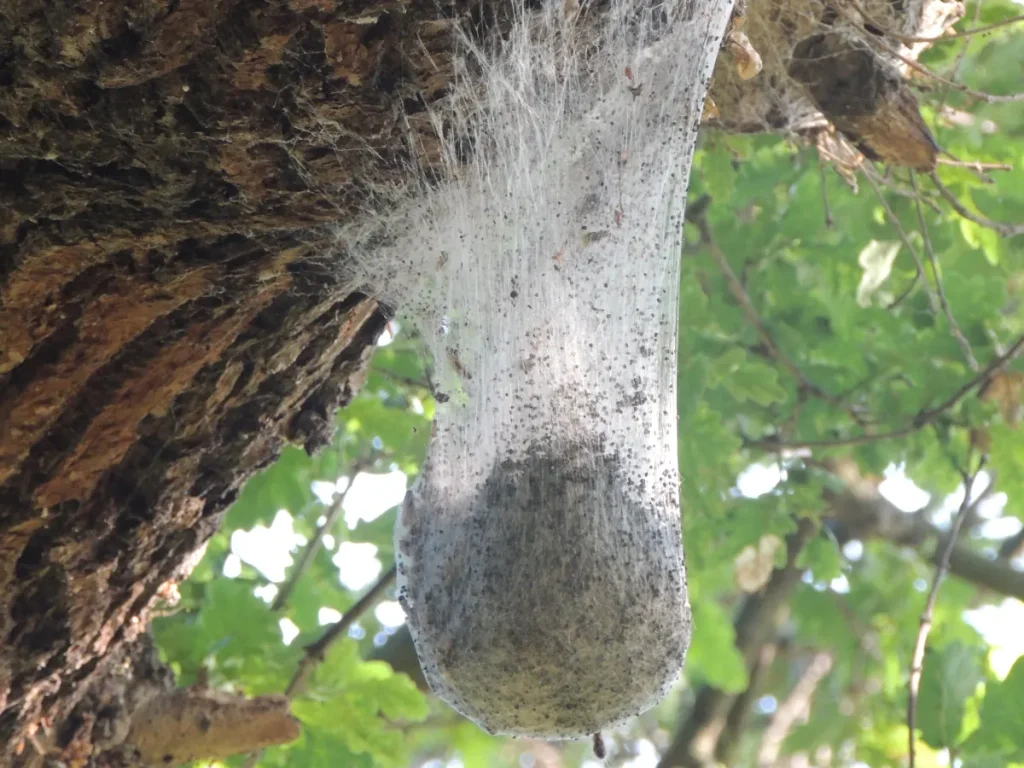
IDENTIFYING AN OPM NEST
What an OPM nest looks like.
OPM nests are made from dense white or grey silken webbing and are usually attached to the trunk or larger branches of an oak tree. They vary in size and can become darker as shed skins and other material collect inside.
Old nests can remain on the tree after the caterpillars have moved on and may still contain irritating hairs. If you find a suspected nest, keep your distance and do not touch or disturb it.

WHY OPM MATTERS
A risk to people, animals and oak trees.
Oak processionary moth caterpillars feed on oak leaves and can weaken affected trees. The more immediate concern is their microscopic hairs, which can be released by both the caterpillars and their nests.
These hairs may cause itchy skin rashes, eye or throat irritation and, occasionally, breathing difficulties in people and animals. Old nests can continue to contain hairs, so they should not be touched even when no caterpillars are visible.
OPM MANAGEMENT
Oak processionary moth treatment for every site and season.
The right approach to oak processionary moth treatment depends on the caterpillars’ stage of development, the location of the tree and the extent of the infestation. ATS assesses these factors before recommending appropriate work.
OPM assessment
Inspection of oak trees to identify visible caterpillars, nests and the extent of suspected activity.
Timed caterpillar treatment
Appropriate treatment of active caterpillars where conditions, timing and the surrounding environment allow.
Professional nest removal
Careful removal and controlled handling of OPM nests by trained and suitably equipped arborists.
Access at height
Climbing or MEWP access selected according to the tree, nest position and surrounding site constraints.
Work on managed sites
OPM support for gardens, estates, workplaces, schools, public spaces and other managed environments.
Practical follow-up advice
Clear guidance on monitoring the tree, managing access and responding to any further signs of activity.
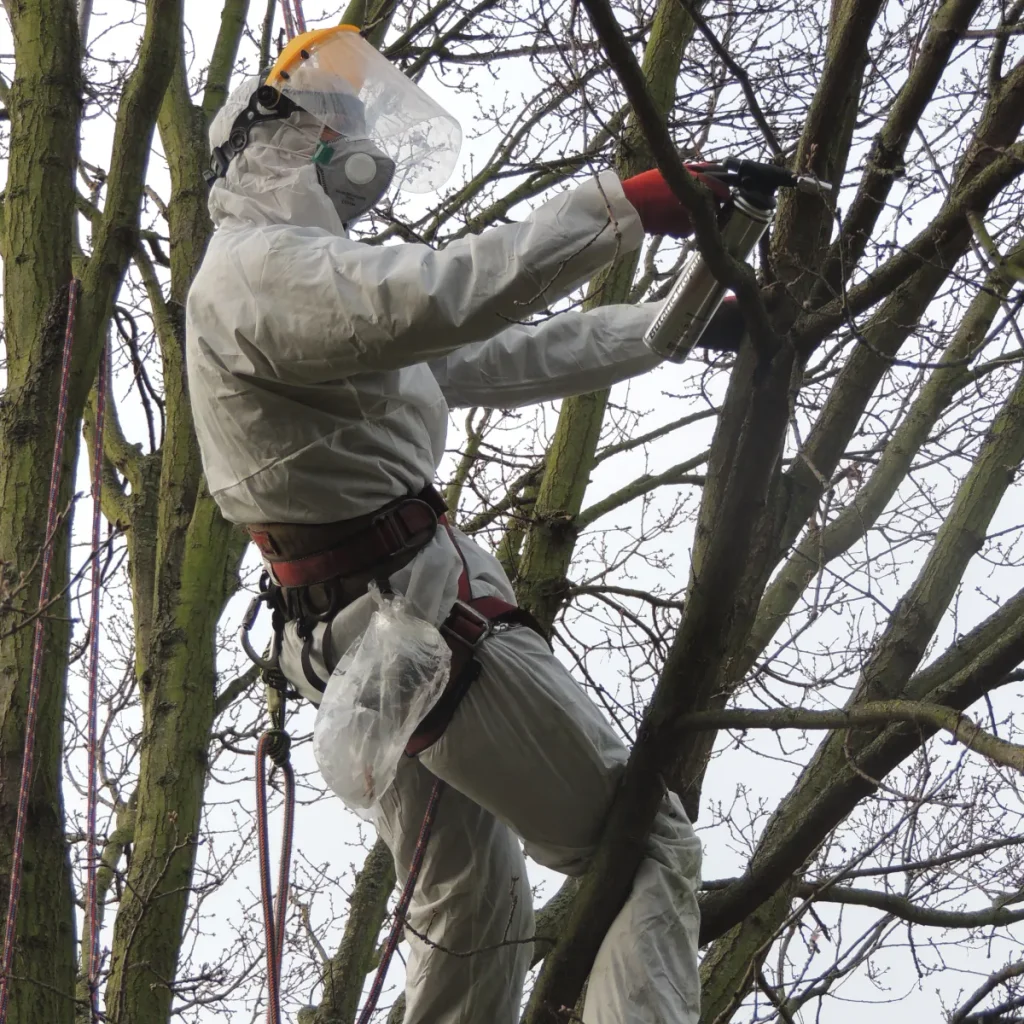
PROFESSIONAL OPM REMOVAL
Specialist removal without spreading the risk.
OPM nests require careful handling because their irritating hairs can remain hazardous even after the caterpillars have moved on. Disturbing a nest without suitable controls can release these hairs into the surrounding area.
Following an assessment, oak processionary moth treatment or removal is planned around the tree, its location and nearby site users. Trained arborists use appropriate access equipment and controlled removal methods to contain the material and minimise unnecessary disturbance.
HOW WE MANAGE OPM
A controlled process from assessment to follow-up.
Every site is different, so ATS assesses the tree, the extent of the suspected activity and the practical constraints before recommending and carrying out appropriate work.
01
Initial enquiry
Tell us what you have noticed, where the tree is located and whether people or animals could be at risk.
02
Site assessment
ATS inspects the oak tree, visible caterpillars or nests, access requirements and the surrounding environment.
03
Clear recommendation
We explain whether monitoring, timed treatment or professional nest removal is the appropriate response.
04
Controlled work
Trained operatives carry out the agreed work using suitable access equipment and carefully managed methods.
05
Practical follow-up
We provide guidance on monitoring the tree, managing access and responding to any further signs of activity.
CLIENT FEEDBACK
Made a thorough search, finding twice as many nests as we had been able to see from the ground. Excellent all round service.
Adam McIlroy
OPM management customer · Trustpilot · June 2026
OAK PROCESSIONARY MOTH FAQS
Questions about OPM management.
Clear guidance on identifying suspected OPM, reducing risk and arranging professional assessment.
How can I tell whether a tree may have OPM?
Look for grey caterpillars with long white hairs moving in nose-to-tail processions, or silken nests attached to the trunk or branches of an oak tree. Do not touch them; arrange a professional assessment.
Are oak processionary moth caterpillars dangerous?
Their microscopic hairs can irritate the skin, eyes and throat and may sometimes cause breathing difficulties. The hairs can also affect animals, so people and pets should be kept away.
When should oak processionary moth treatment or removal be carried out?
The appropriate response depends on the caterpillars’ stage of development, the time of year, the nest location and the surrounding site. ATS assesses these factors before recommending treatment, removal or monitoring.
Can I remove an OPM nest myself?
No. OPM nests should not be touched or disturbed. Hazardous hairs can remain in old nest material, so removal should be undertaken by suitably trained and equipped professionals.
SUSPECTED OPM?
Keep your distance and speak to ATS.
Do not touch or disturb the caterpillars or nests. Tell us where the oak tree is located and what you have observed, and we’ll arrange an assessment where appropriate.